
Mobility & Pain Treatments in Markham
Mobility & Pain Treatments in Markham
You Don’t Notice the Decline…
Until It Starts Showing Up
Everywhere!
This is common—but it’s not something you have to accept.
Most people don’t walk in with a diagnosis.
They come in because something doesn’t feel right anymore.
You Don’t Notice the Decline…
Until It Starts Showing Up
Everywhere!
This is common—but it’s not something you have to accept.
Most people don’t walk in with a diagnosis.
They come in because something doesn’t feel right anymore.
We see this every day —
people who thought it was just aging…
Until they realized it wasn’t.
If you've been feeling this... you're not alone!
We see this
every day!
People who thought it was just aging…
Until they realized it wasn’t.
If you've been feeling this...
You're not alone!
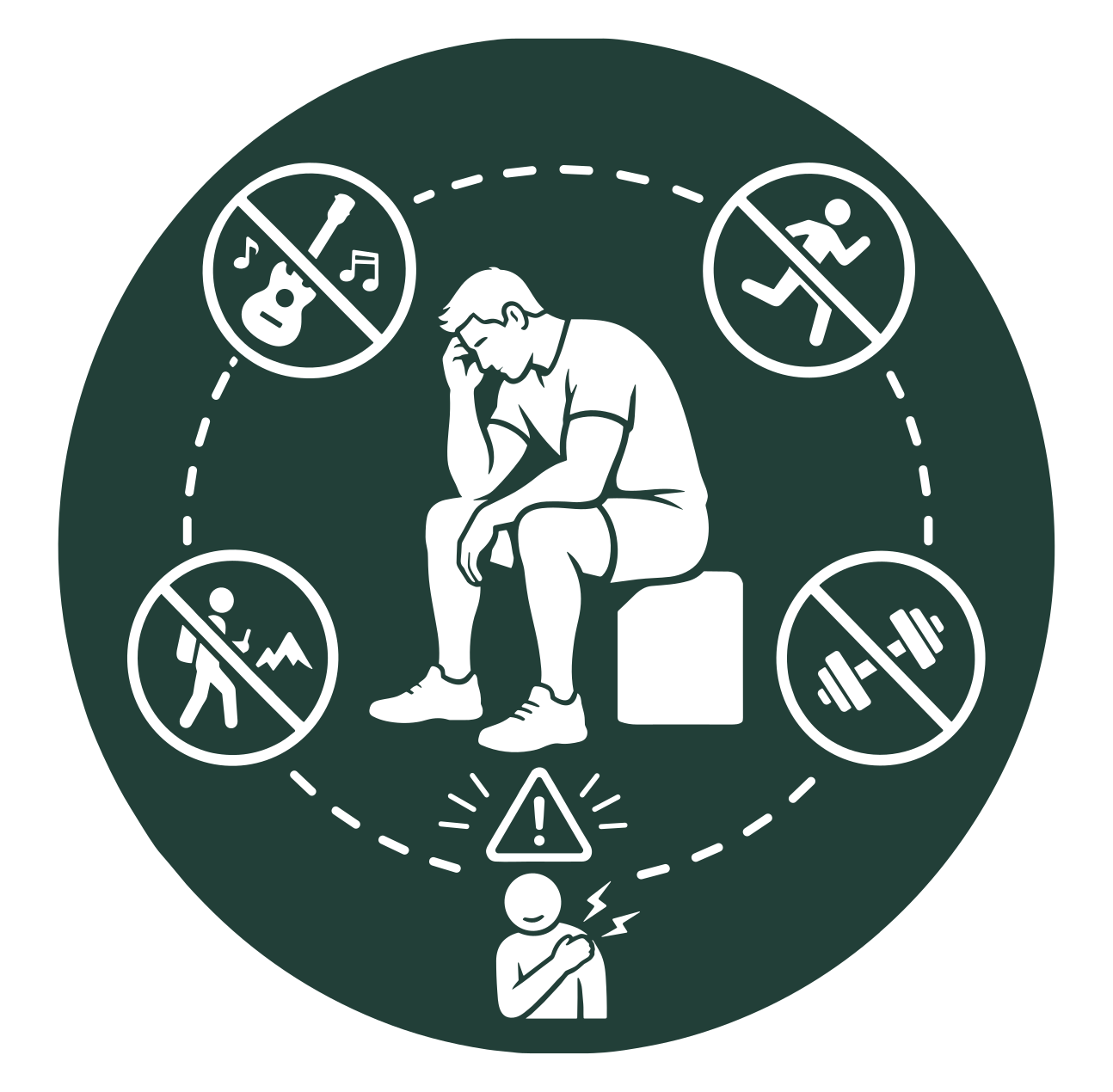
I’ve stopped doing things I used to enjoy
You’ve cut back on activities.
You hesitate before doing certain movements.
You’re playing it safe more often.
This is where the real impact starts—not just physical, but lifestyle.
Often associated with: ongoing pain, movement limitations.
Want to move better, feel stronger, and stay active with confidence?
Book a free 20-minute Movement Discovery Call. We’ll talk about where you feel limited, what you’d like to get back to doing, and whether the Kinetus approach is a good fit for your goals.
A simple conversation could be the first step toward moving better.
I’ve stopped doing things I used to enjoy
You’ve cut back on activities.
You hesitate before doing certain movements.
You’re playing it safe more often.
This is where the real impact starts—not just physical, but lifestyle.
Often associated with: ongoing pain, movement limitations
I feel like I’m slowing down physically
Everything feels a bit harder.
You don’t move with the same confidence.
You’re not as capable as you used to feel.
This isn’t something that happens overnight—it builds gradually.
Commonly associated with: long-term movement decline
I feel like I’m slowing down physically
Everything feels a bit harder.
You don’t move with the same confidence.
You’re not as capable as you used to feel.
This isn’t something that happens overnight—it builds gradually.
Commonly associated with: long-term movement decline
I just don’t feel like myself anymore
You’re more cautious.
You think about pain before moving.
You don’t trust your body the same way.
This is what many people describe—but rarely say out loud.
Often associated with: accumulated movement limitations over time
I just don’t feel like myself anymore
You’re more cautious.
You think about pain before moving.
You don’t trust your body the same way.
This is what many people describe—but rarely say out loud.
Often associated with: accumulated movement limitations over time
This is the first time something actually fixed the problem—not just helped for a few days.
Clarice Turner


★★★★★
My shoulder just doesn’t
move like it used to
Reaching overhead feels restricted.
Putting on a jacket is uncomfortable.
Lifting doesn’t feel smooth anymore.
This usually isn’t from one specific injury—it’s how your shoulder has gradually adapted over time.
Commonly associated with: rotator cuff issues, shoulder impingement
My shoulder just doesn’t move like it used to!
Reaching overhead feels restricted.
Putting on a jacket is uncomfortable.
Lifting doesn’t feel smooth anymore.
This usually isn’t from one specific injury—it’s how your shoulder has gradually adapted over time.
Commonly associated with: rotator cuff issues, shoulder impingement
My knees feel stiff, sore, or unreliable
Stairs are harder than they should be.
Squatting feels uncomfortable.
Your knees don’t feel as strong or stable.
This often develops gradually as movement patterns change and the joint isn’t functioning the way it should.
Commonly associated with: knee degeneration, patellar tracking issues
My knees feel stiff, sore, or unreliable
Stairs are harder than they should be.
Squatting feels uncomfortable.
Your knees don’t feel as strong or stable.
This often develops gradually as movement patterns change and the joint isn’t functioning the way it should.
Commonly associated with: knee degeneration, patellar tracking issues
My back is always tight or sore
You wake up stiff.
Sitting or standing too long causes discomfort.
Flexibility isn’t what it used to be.
Back issues are rarely just about the back—they’re often tied to how your body moves as a whole.
Commonly associated with: lower back dysfunction, muscle imbalances
My back is always tight or sore
You wake up stiff.
Sitting or standing too long causes discomfort.
Flexibility isn’t what it used to be.
Back issues are rarely just about the back—they’re often tied to how your body moves as a whole.
Commonly associated with: lower back dysfunction, muscle imbalances
It’s Not Just One Problem
Most people think they have one issue.
But what’s really happening… is a combination of small problems that have built up over time.
That’s why nothing seems to fully fix it.
It’s Not Just One Problem
Most people think they have one issue.
But what’s really happening… is a combination of small problems that have built up over time.
That’s why nothing seems to fully fix it.
My hips feel tight and restricted
Getting up from a chair takes effort.
Walking doesn’t feel as natural.
There’s a constant feeling of tightness.
Hip limitations tend to build slowly over time, especially when movement becomes more limited.
Commonly associated with: hip mobility restrictions, joint dysfunction
My hips feel tight and restricted
Getting up from a chair takes effort.
Walking doesn’t feel as natural.
There’s a constant feeling of tightness.
Hip limitations tend to build slowly over time, especially when movement becomes more limited.
Commonly associated with: hip mobility restrictions, joint dysfunction
My feet or heels hurt when I walk
The first steps in the morning are painful.
Longer walks feel uncomfortable.
You’ve started avoiding being on your feet too long.
This is often a result of how your body is distributing pressure and movement over time.
Commonly associated with: plantar fasciitis
My feet or heels hurt when I walk
The first steps in the morning are painful.
Longer walks feel uncomfortable.
You’ve started avoiding being on your feet too long.
This is often a result of how your body is distributing pressure and movement over time.
Commonly associated with: plantar fasciitis
My neck is always tight or stiff
Turning your head isn’t as easy as it used to be.
There’s constant tension or discomfort.
Sitting for too long makes it worse.
Neck stiffness is often connected to posture and movement patterns—not just the neck itself.
Commonly associated with: cervical stiffness, postural dysfunction
My neck is always tight or stiff
Turning your head isn’t as easy as it used to be.
There’s constant tension or discomfort.
Sitting for too long makes it worse.
Neck stiffness is often connected to posture and movement patterns—not just the neck itself.
Commonly associated with: cervical stiffness, postural dysfunction
I feel stiff all the time
Your body feels heavy or restricted.
Movement takes more effort than it used to.
You’re not as fluid or comfortable.
This is one of the most common signs of gradual movement decline.
Commonly associated with: general mobility loss
I feel stiff all the time
Your body feels heavy or restricted.
Movement takes more effort than it used to.
You’re not as fluid or comfortable.
This is one of the most common signs of gradual movement decline.
Commonly associated with: general mobility loss
The longer this goes on, the more your body adapts in the wrong way.
The sooner you address it, the easier it is to fix.
✔ Structured, step-by-step program
✔ Designed for long-term results
✔ No obligation, no pressure
The longer this goes on, the more your body adapts in the wrong way.
The sooner you address it, the easier it is to fix.
✔ Structured, step-by-step program
✔ Designed for long-term results
✔ No obligation, no pressure
Find us at
6633 Highway 7 Suite 205,
Markham Ontario
L3P 7P2
437-871-3004
Working Hours
Tuesday, Wednesday & Thursday:
12:00 pm - 7:00 pm
Special Time Requests Available